
 Bahasa Indonesia
 English
 Türkçe
 Deutsch
 العربية
 中文
 Русский
 Español

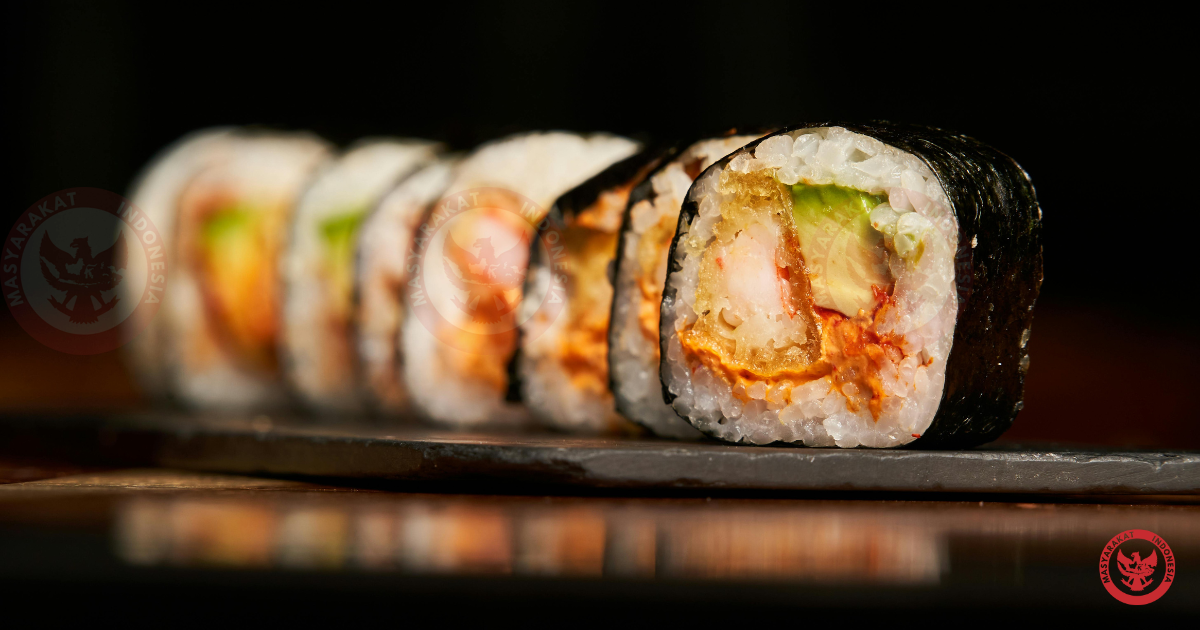
Sushi is a Japanese delicacy that is incredibly popular worldwide. Many people think making sushi is difficult, but with simple ingredients, you can easily make it yourself at home. Not only is it more cost-effective, but you can also customize the fillings to suit your taste.
Sushi Ingredients
Main Ingredients
- 2 cups sushi rice (Japanese short-grain rice)
- Water (as needed for cooking the rice)
- 4 sheets of nori (seaweed)
Sushi Rice Seasoning
- 3 tbsp rice vinegar
- 2 tbsp granulated sugar
- 1 tsp salt
Sushi Fillings
You can choose one or a combination of the following fillings:
- Cucumber, cut into strips
- Carrot, blanched briefly and cut into strips
- Avocado, thinly sliced
- Omelet, cut into strips
- Crab sticks
- Boiled shrimp
- Fresh salmon (food-grade)
- Fresh tuna (food-grade)
- Smoked salmon
- Cheese (optional)
- Japanese mayonnaise
- Lettuce (optional)
Accompaniments
- Soy sauce
- Wasabi
- Pickled ginger
- Toasted sesame seeds (optional)
Tools Needed
- Bamboo mat (makisu)
- Sharp knife
- Small bowl of water (for wetting hands)
How to Make Sushi
1. Cook the Rice
Rinse the rice until the water runs clear, then cook it as usual using a rice cooker or a pot.
2. Prepare the Rice Seasoning
Mix the rice vinegar, sugar, and salt. Stir until the sugar and salt have dissolved.
3. Mix with the Rice
While the rice is still warm, pour in the seasoning mixture gradually while stirring gently with a wooden spatula. Let it sit until the rice cools to a lukewarm or room temperature.
4. Prepare the Nori
Place the bamboo mat on the table, then lay down a sheet of nori with the shiny side facing down.
5. Spread the Rice
Moisten your hands to prevent the rice from sticking, then spread the rice evenly over the nori. Leave a gap of about 2 cm at the top edge of the nori to make sealing easier.
6. Add Fillings
Arrange your fillings—such as cucumber, avocado, crab stick, egg, or salmon—in the center of the rice.
7. Roll the Sushi
Slowly roll the sushi using the bamboo mat, applying gentle pressure to ensure it is compact. Lightly moisten the edge of the nori so the roll seals perfectly.
8. Cut the Sushi
Use a sharp knife and moisten it with water before slicing. Cut the roll into 6–8 pieces for a neat finish.
9. Serve
Serve the sushi with soy sauce, wasabi, and pickled ginger to enhance the flavor.
Tips for Successful Sushi Making
- Use sushi rice to ensure the right sticky texture.
- Avoid using rice that is too hot when rolling.
- Moisten the knife before each cut for cleaner slices.
- If using raw fish, ensure it is sashimi-grade (food-grade) and safe for consumption.
Conclusion
Making sushi at home is not as difficult as you might think. With easily accessible ingredients and simple steps, you can enjoy delicious sushi with family and friends. Have fun trying it out and experimenting with your favorite fillings!
Comments (1) View in forum
Discuss this article in the community Ask questions, share your thoughts, and chat with other members.28 people have already joined this community. Join in to comment and like posts!
Great article! Making sushi at home is a fun way to enjoy Japanese cuisine, and it also offers great opportunities for small food businesses and home-based entrepreneurs.
For those who sell sushi or other Japanese dishes, food packaging is an important part of the customer experience. Insulated tautan eksternal 1 are a practical option for food delivery, as they help maintain the temperature of packaged food during transportation. When combined with appropriate food containers and temperature-control methods, they can help businesses deliver orders more conveniently.
Another useful packaging option is reusable spunbond bags. Restaurants, sushi shops, and food brands can customize these bags with their logos and brand colors for promotional giveaways, customer appreciation gifts, food festivals, and marketing campaigns. They offer a practical way to increase brand visibility while giving customers something they can reuse in their daily lives.
Choosing suitable packaging can help food businesses improve their presentation, provide a better customer experience, and build stronger brand recognition.
For businesses looking for customized spunbond bags or insulated cooler bags, you can explore the available options at tautan eksternal 2.
What packaging solutions do you think work best for small food businesses and takeaway restaurants?