 Bahasa Indonesia
  English
  Türkçe
  Deutsch
  العربية
  中文
中文  Русский
  Español
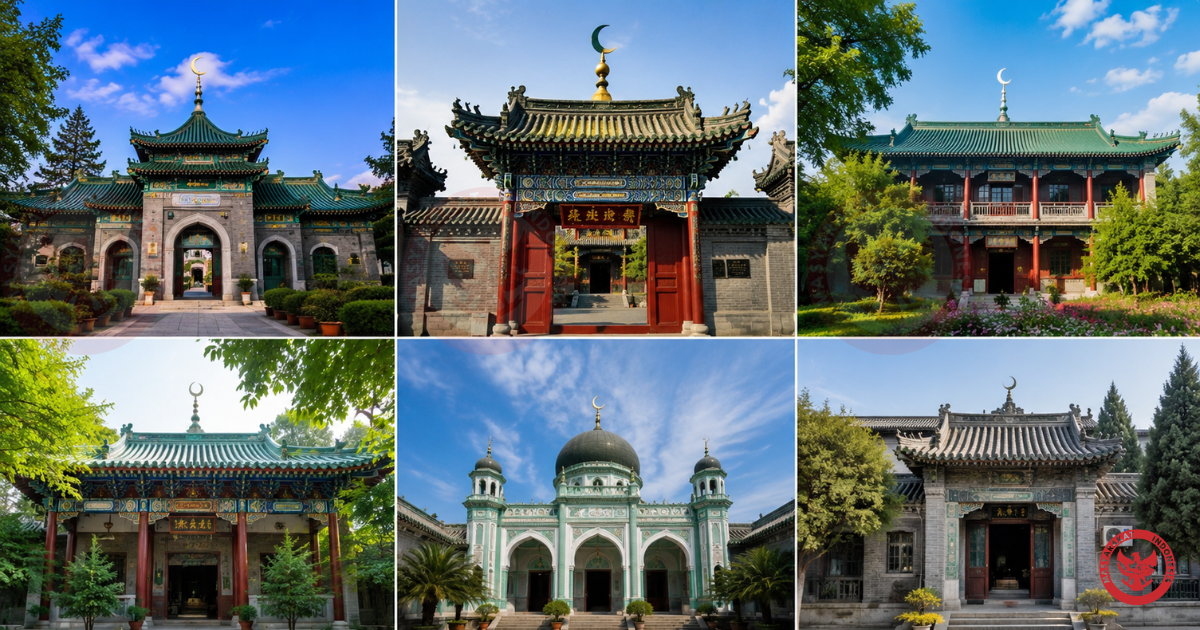
Islam in Beijing, China
Many people associate China with Buddhist temples or ancient Chinese-style architecture. However, Islam has been present in China for over a thousand years, having flourished through Arab and Central Asian traders who arrived via the Silk Road.
Beijing is home to dozens of mosques that remain active places of worship to this day. Their architecture is unique, blending traditional Chinese styles with Islamic elements, making them distinct from the mosques typically found in the Middle East.
Here are some historic mosques you can visit while in Beijing.
1. Niujie Mosque (牛街礼拜寺)
Mandarin Name: 牛街礼拜寺 (Niújiē Lǐbàisì) 📍 Location: Niujie, Xicheng District, Beijing 📅 Established: 996 AD 👑 Dynasty: Liao ⏳ Age: Over 1,000 years
This mosque serves as a spiritual hub for the nearly 10,000 Muslims living in the surrounding area and is the largest and oldest mosque in Beijing. It was formerly located in Xuanwu District before that district was merged into Xicheng District in 2010. The Niujie area in Xicheng District, where the mosque is situated, boasts the largest Muslim population in Beijing.
2. Dongsi Mosque (东四清真寺)
Mandarin Name: 东四清真寺 (Dōngsì Qīngzhēnsì) 📍 Location: No. 13 Dongsi South Street, Dongcheng District, Beijing 📅 Established: Circa 1356 AD 👑 Dynasty: Yuan ⏳ Age: Approximately 670 years
The mosque is built around three Chinese-style courtyards, with the ablution area, library, and prayer hall located at the rear. The prayer hall is the only section that has survived since the Ming Dynasty; after years of neglect, it has been restored to its original splendor. At one end of the hall's veranda stands a bell that once topped a tower (which no longer exists), while at the other end is an inscription dating back to the reign of the Wanli Emperor (1573–1620) of the Ming Dynasty.
3. Changying Mosque (常营清真寺)
Mandarin Name: 常营清真寺 (Chángyíng Qīngzhēnsì) 📍 Location: Changying Hui Ethnic Township, Chaoyang District, Beijing 📅 Established: Circa 1506–1521 👑 Dynasty: Ming ⏳ Age: Approximately 500 years
Changying Mosque was built during the reign of Emperor Zhengde of the Ming Dynasty. It serves as a center of worship for the Hui community that has long resided in the Changying area. Its architecture features the black bricks and green roof tiles characteristic of traditional Chinese buildings. Although it has undergone several renovations, the original structure has been preserved, allowing its historical significance to remain palpable.
4. Huashi Mosque (花市清真寺)
Mandarin Name: 花市清真寺 (Huāshì Qīngzhēnsì) 📍 Location: Dongcheng District, Beijing 📅 Established: 1415 AD 👑 Dynasty: Ming ⏳ Age: Over 600 years
Huashi Mosque was built during the reign of Emperor Yongle of the Ming Dynasty. It is renowned for its spacious courtyard and classic Chinese-style architecture, and it historically served as a center for Islamic education in Beijing.
5. Madian Mosque (马甸清真寺)
This mosque was built during the reign of Emperor Kangxi (ruled 1661–1722) of the Qing Dynasty to accommodate the large ethnic Hui population in the area. During the Cultural Revolution, the mosque was converted into a factory, with its prayer hall transformed into a workshop. In 1982, the factory relocated, and the building resumed its function as a mosque.
6. Dongzhimen Mosque (东直门清真寺)
Mandarin Name: 东直门清真寺 (Dōngzhímén Qīngzhēnsì) 📍 Location: Dongcheng District, Beijing 📅 Established: Yuan Dynasty era
Dongzhimen Mosque is one of the historic mosques in eastern Beijing. Although the current structure dates back to the late Qing Dynasty, the mosque's history traces back to the Yuan Dynasty. The building retains the square courtyard layout typical of traditional Chinese homes, while the prayer hall remains oriented toward the Qibla (direction of prayer).
The Unique Architecture of Beijing's Mosques
What sets Beijing's mosques apart is their design. From the outside, the building resembles a traditional Chinese temple or palace more than a Middle Eastern mosque.
However, upon entering, visitors will find:
Arabic calligraphy. A mihrab facing the qibla. Islamic ornamentation. A spacious prayer hall. A harmonious blend of Chinese and Islamic cultures.
This fusion of two cultures is a major highlight of halal tourism in Beijing.
Conclusion
The presence of historic mosques in Beijing demonstrates that Islam has been part of China's long history for over a thousand years. From the Niujie Mosque—dating back more than a millennium—to the Dongsi, Huashi, and Changying Mosques, these structures all bear witness to the journey of the Muslim community in the capital of the Land of the Bamboo Curtain.
Comments (0) View in forum
Discuss this article in the community Ask questions, share your thoughts, and chat with other members.18 people have already joined this community. Join in to comment and like posts!
No messages yet — be the first.