 Bahasa Indonesia
  English
  Türkçe
  Deutsch
  العربية
  中文
中文  Русский
  Español
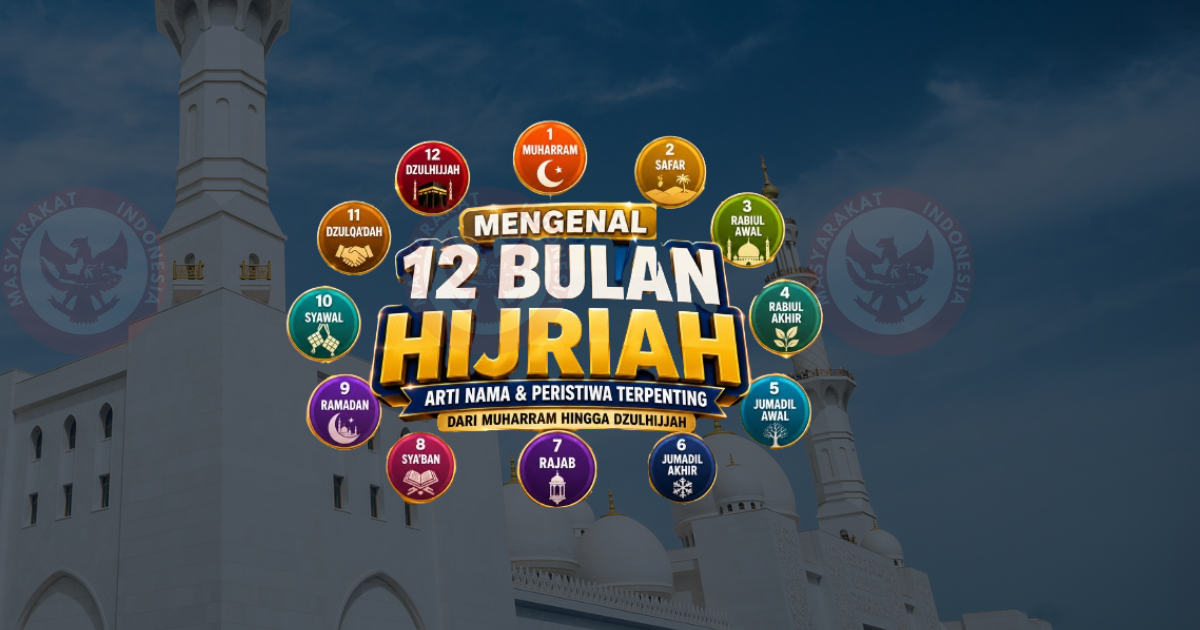
Have you ever noticed that the Islamic calendar has unique month names?
There are Muharram, Safar, Rabi' al-Awwal, Rabi' al-Akhir, Jumada al-Ula, Jumada al-Akhirah, Rajab, Sha'ban, Ramadan, Shawwal, Dhul-Qa'dah, and Dhul-Hijjah.
The Hijri calendar is not merely the dating system of Muslims. Within it lie a long history, the traditions of Arab society, and various key events along the journey of Islam.
The Hijri calendar consists of 12 months, as mentioned in the Qur'an:
“Indeed, the number of months with Allah is twelve months...” (Qur'an, At-Tawbah: 36)
Interestingly, not every month has a specific act of worship established by the Shariah. However, some months carry clear virtues based on the Qur'an and hadith, while other months hold many historical events that are worth remembering.
Let us walk through the Hijri calendar from the first month to the last.
1. Muharram — The Honored Month
Muharram (مُحَرَّم) means “that which is forbidden” or “that which is honored.”
This name is connected to the prohibition of waging war during that month in Arab tradition. Muharram is one of the four sacred months in Islam.
Those four sacred months are:
- Dhul-Qa'dah
- Dhul-Hijjah
- Muharram
- Rajab
Key event: the Day of Ashura
One of the best-known times in Muharram is 10 Muharram, which is called the Day of Ashura.
Fasting on Ashura carries a great virtue. The Messenger of Allah ﷺ also encouraged Muslims to fast on 9 Muharram along with 10 Muharram.
Muharram is also the start of the new year in the Hijri calendar.
Something interesting
Muharram is the first month of the Hijri calendar, but the Hijri calendar was officially established during the rule of Umar ibn al-Khattab رضي الله عنه.
Interestingly, the Hijri year does not begin from the birth of the Messenger of Allah ﷺ; instead it uses the event of the Hijrah as the starting point of the dating system.
2. Safar — The Month Once Considered Unlucky
Safar (صَفَر) has several linguistic explanations, one of them connected to the condition of being “empty.”
This name is often linked to the habit of the Arabs of old, who left their homes to travel or to fight, so that their dwellings became empty.
Are there major events in the month of Safar?
There is no specific act of worship established by the Shariah for the month of Safar.
In Islamic history there are various events that took place in this month, but there is no specific virtue authentically establishing Safar as a particular month for a specific act of worship.
Something interesting
In the era of Jahiliyyah, a belief once spread that Safar was a month of bad luck. Islam abolished that superstitious belief.
For that reason, a Muslim should not regard Safar as a month that brings misfortune.
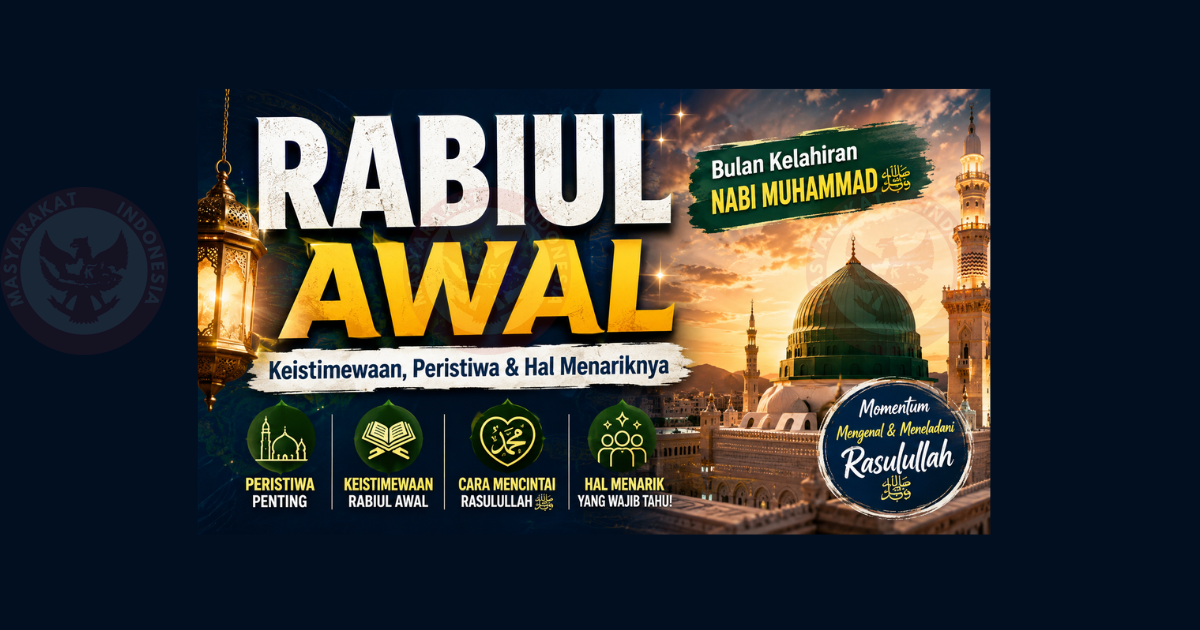
3. Rabi' al-Awwal — The Month That Reminds Us of the Messenger of Allah ﷺ
Rabi' al-Awwal (رَبِيع الأول) means “the first spring.”
Rabī‘ means spring, while al-awwal means first.
Key events
Rabi' al-Awwal is very closely tied to the life of the Prophet Muhammad ﷺ.
This month is associated with:
- The birth of the Prophet Muhammad ﷺ.
- The Hijrah and the arrival of the Messenger of Allah ﷺ in Madinah.
- The passing of the Messenger of Allah ﷺ in the year 11 Hijri.
However, regarding the exact date of the birth of the Messenger of Allah ﷺ, there is a difference of opinion among historians. The date of 12 Rabi' al-Awwal is very popular among Muslims, but it is not the only opinion.
Something interesting
Because the Hijri calendar is based on the cycle of the moon, Rabi' al-Awwal does not always fall in spring. The name of the month stays the same, but its season keeps shifting every few years.
4. Rabi' al-Akhir — The Second Spring
Rabi' al-Akhir (رَبِيع الآخر) means “the second spring.”
This name is connected to Rabi' al-Awwal.
In some literature, this month is also called Rabi' ath-Thani, which means the second Rabi'.
Key events
There is no specific act of worship established by the Shariah for Rabi' al-Akhir.
However, throughout Islamic history, various political events, da'wah efforts, and developments within Muslim society took place in this month.
Something interesting
The names Rabi' al-Awwal and Rabi' al-Akhir come from a naming system connected to the seasons. Nevertheless, because the Hijri calendar is lunar, the two of them today do not always fall in spring.
5. Jumada al-Ula — The Month When the Ground Dries
Jumada al-Ula (جُمَادَى الأولى) comes from a word connected to dryness or freezing.
This naming is believed to be connected to the natural conditions in the time of the Arabs of old, when water and land went through a dry or cold state.
Key events
There is no specific act of worship established for Jumada al-Ula.
However, in Islamic history there are various events that took place in this month.
One of them is the Battle of Mu'tah, which occurred in the time of the Messenger of Allah ﷺ and involved the Muslim army against the Byzantines and their allies.
6. Jumada al-Akhirah — The Continuation of the Jumada Month
Jumada al-Akhirah (جُمَادَى الآخرة) means the last Jumada.
This month is the counterpart of Jumada al-Ula.
Key events
There is no specific practice established by the Shariah for the month of Jumada al-Akhirah.
However, Islamic history kept developing throughout this month, and various key events took place in the period after the Messenger of Allah ﷺ, including in the time of the Companions and the generations that followed.
Something interesting
The names Jumada al-Ula and Jumada al-Akhirah are one example showing that the naming of the Hijri months was originally very closely tied to natural conditions and to the life of Arab society.
7. Rajab — One of the Four Sacred Months
Rajab (رَجَب) carries a meaning connected to exalting or honoring.
Rajab is one of the four sacred months.
For that reason, this month holds a special position in the Shariah.
Key event: Isra and Mi'raj
Rajab is often associated with the event of Isra and Mi'raj, that is, the journey of the Messenger of Allah ﷺ from the Sacred Mosque to Al-Aqsa Mosque, and then his ascent to the heavens.
This event is very important in Islamic history because it is connected to the obligation of the five daily prayers.
However, it should be noted that the date of 27 Rajab as the date of Isra Mi'raj does not have strongly agreed-upon certainty in the historical sources.
Something interesting
Rajab is one of the four sacred months, so Muslims are encouraged to guard themselves even more from sinful acts and disobedience.
8. Sha'ban — The Month Leading Up to Ramadan
Sha'ban (شَعْبَان) carries a meaning connected to scattering or spreading out.
One explanation of its naming is that the Arabs of old scattered in search of water or set out on journeys after the month of Rajab.
Key event: the change of the qiblah direction
One of the key events connected to the period of Sha'ban is the change of the qiblah direction from Bayt al-Maqdis toward the Ka'bah in Makkah.
The change of the qiblah is one of the important milestones in the history of the Muslim community.
Something interesting
Sha'ban is often a month of preparation for Ramadan.
The Messenger of Allah ﷺ was also known to fast a great deal in the month of Sha'ban compared with the other months apart from Ramadan.
For that reason, Sha'ban can be the moment to begin preparing the body, the heart, and habits of worship before entering Ramadan.
9. Ramadan — The Month in Which the Qur'an Was Sent Down
Ramadan (رَمَضَان) comes from a word connected to intense, scorching heat.
There is an explanation that the name is connected to the hot conditions at the time the month was given its name.
But for Muslims, Ramadan holds a far greater meaning.
Key event: the revelation of the Qur'an
Ramadan is a very special month because the Qur'an was sent down in this month.
Allah says:
“The month of Ramadan is the month in which the Qur'an was sent down...” (Qur'an, Al-Baqarah: 185)
Within Ramadan there is also Laylat al-Qadr, the night that is better than a thousand months.
Other key events
Ramadan is also the month in which a number of great events in Islamic history took place, including:
- The Battle of Badr in Ramadan of the year 2 Hijri.
- Fathu Makkah, the Conquest of Makkah, in Ramadan of the year 8 Hijri.
Something interesting
Ramadan is the only month name mentioned directly in the Qur'an.
10. Shawwal — The Month When Joy Returns
Shawwal (شَوَّال) comes from a word carrying the meaning of rising or being lifted up.
In Arab tradition, this name is connected to a certain change in the condition of camels during that period.
Key events
The 1st of Shawwal is Eid al-Fitr, the festival after Muslims complete the fast of Ramadan.
However, Shawwal is not only about the festival.
In this month there is also the encouragement to observe the six days of fasting in Shawwal.
The Messenger of Allah ﷺ said that whoever fasts Ramadan and then follows it with six days in the month of Shawwal receives the reward of fasting the whole year.
Historical events
One of the key events that took place in the month of Shawwal is the Battle of Uhud in the year 3 Hijri.
11. Dhul-Qa'dah — The Month for Sitting and Not Fighting
Dhul-Qa'dah (ذُو القعدة) is linguistically connected to sitting or stopping.
This name is linked to the custom among the Arabs of halting warfare and preparing for the journey to the Hajj pilgrimage.
Dhul-Qa'dah is one of the four sacred months.
Key events
One of the well-known events is the Treaty of Hudaybiyyah between the Messenger of Allah ﷺ and the Quraysh in the year 6 Hijri.
This treaty became one of the important turning points in the development of Islamic da'wah.
Something interesting
Dhul-Qa'dah is a month very close to the Hajj season. Many pilgrims begin preparing for the journey to the Holy Land.
12. Dhul-Hijjah — The Month of Hajj and Sacrifice
Dhul-Hijjah (ذُو الحجة) means “the owner of Hajj” or “the month of Hajj.”
That name is very closely connected to the performance of the Hajj pilgrimage.
Dhul-Hijjah is one of the four sacred months and is the last month in the Hijri calendar.
Key events and acts of worship
Dhul-Hijjah is a month full of great acts of worship:
- The performance of the Hajj pilgrimage.
- Wuquf at Arafat.
- Eid al-Adha on 10 Dhul-Hijjah.
- The slaughtering of sacrificial animals.
- The Days of Tashriq on 11, 12, and 13 Dhul-Hijjah.
The first 10 days of Dhul-Hijjah
The first ten days of Dhul-Hijjah carry a great virtue.
Many scholars explain that righteous deeds during the first ten days of Dhul-Hijjah hold a very special position.
Something interesting
Dhul-Hijjah closes the Hijri calendar, but at the same time it is the month that displays one of the greatest images of the unity of the Muslim community.
Millions of Muslims from various countries, languages, tribes, and backgrounds gather in the Holy Land with the same purpose: to worship Allah.
A Summary of the 12 Hijri Months
| No. | Hijri month | Meaning/Name | Key event or moment |
|---|---|---|---|
| 1 | Muharram | The honored one | Ashura, the start of the Hijri year |
| 2 | Safar | Empty/scattered | No specific act of worship |
| 3 | Rabi' al-Awwal | First spring | Birth, Hijrah, and passing of the Messenger of Allah ﷺ |
| 4 | Rabi' al-Akhir | Second spring | Various events in Islamic history |
| 5 | Jumada al-Ula | Dry season | Battle of Mu'tah and other historical events |
| 6 | Jumada al-Akhirah | Last Jumada | Various events in Islamic history |
| 7 | Rajab | To honor | One of the sacred months; Isra Mi'raj is often linked to it |
| 8 | Sha'ban | Scattering/spreading | Preparing for Ramadan; the qiblah changed in this period |
| 9 | Ramadan | Scorching heat | Revelation of the Qur'an, Badr, Conquest of Makkah |
| 10 | Shawwal | Lifted up/rising | Eid al-Fitr, six days of fasting, Battle of Uhud |
| 11 | Dhul-Qa'dah | Sitting/stopping | Sacred month, Treaty of Hudaybiyyah |
| 12 | Dhul-Hijjah | The month of Hajj | Hajj, Arafat, Eid al-Adha, sacrifice |
The Four Sacred Months in Islam
Out of those twelve months, there are four months that are honored, namely:
Muharram — Rajab — Dhul-Qa'dah — Dhul-Hijjah
Allah says that four of them are sacred months.
For that reason, Muslims are encouraged to guard themselves more from sin and disobedience during those months.
The Hijri Calendar Is Not Just a Dating System
Knowing the names of the Hijri months is not only a matter of memorizing the order. Each month brings us to a particular part of the journey of Islamic history.

Comments (0) View in forum
Discuss this article in the community Ask questions, share your thoughts, and chat with other members.22 people have already joined this community. Join in to comment and like posts!
No messages yet — be the first.